Take the Work Seriously, but Don’t Take Yourself Seriously

There’s a version of your career where you are the show, and a version where you are just the person who walks out, does the work, and goes home.
Late night television is unusually honest about this distinction. It gives you a suit, a desk, a theme song, a wall of applause on demand. It lets you pretend, for a while, that you are the frame rather than the picture. And then, without warning, it takes it all away and watches what you do next.
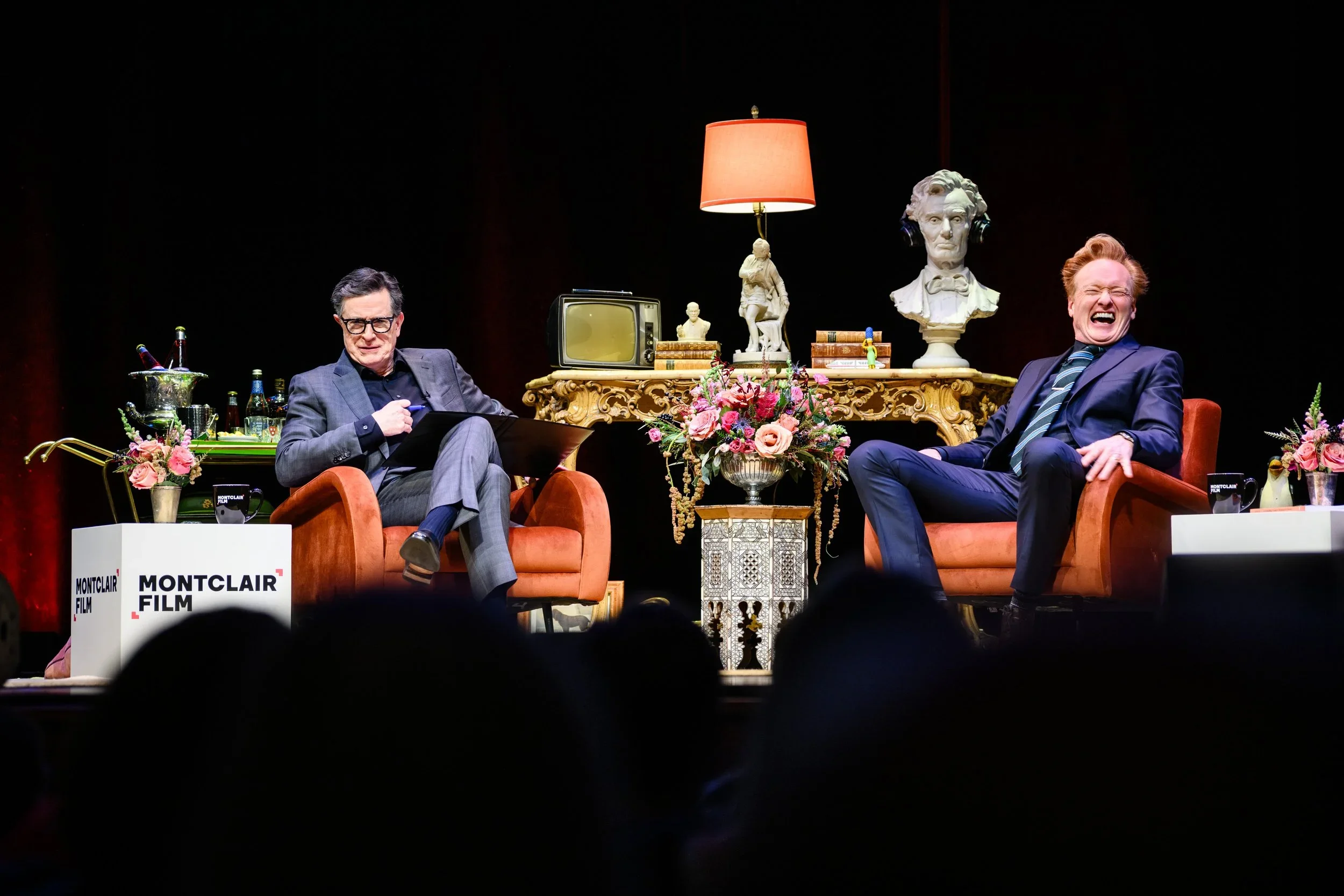
Conan O’Brien and Stephen Colbert have both had that experience at industrial scale. Both built whole identities around jobs which vanished. Both had to decide, in public, whether to treat the loss as a wound to their ego or as a weird plot twist in a longer story.
Both chose the same move. Take the work seriously, but not themselves.
When Conan said goodbye to The Tonight Show after seven chaotic months, he had every right to spit fire. Network politics had chewed him up. The dream job he’d waited years for had been handed back to someone else. The smart play, from an ego standpoint, was to be aggrieved forever. Instead, he stood onstage in front of an audience that loved him and said three things:
Please don’t be cynical. Nobody in life gets exactly what they thought they were going to get. But if you work really hard and you’re kind, amazing things will happen.
There’s a lot of theology for working people buried in that moment. He doesn’t say the work doesn’t matter. He doesn’t detach or shrug. He talks about working really hard. He talks about kindness as a non-negotiable. He talks directly to younger viewers about how dangerous cynicism is as a default operating system.
But he also refuses to treat hosting The Tonight Show as the defining verdict on who he is. The job mattered. The craft mattered. The people mattered. The outcome… less so. The joke, gently, is on the idea that this one setback is the whole story.
Psychologically, that stance looks a lot like what positive psychology calls a “quiet ego”. A way of holding your own importance lightly while still caring deeply about what you do. Humility, it turns out, is strongly linked to lower anxiety and greater well-being, partly because it shifts attention away from constant self-evaluation and back toward learning and contribution. Conan loses the show but keeps the part of himself that actually made the show worth watching, the ability to care fiercely and still be silly about it. That’s the move.

Colbert has had to do this twice. The first time was the end of The Colbert Report in 2014, when he killed Death, became immortal, and sailed off on Santa’s sleigh with Abraham Lincoln and Alex Trebek, singing We’ll Meet Again as the studio filled up with everyone who’d ever been part of the show.
On paper, it’s absurd. In practice, it’s the perfect visual metaphor for taking the work seriously and not yourself. The character he’d played for nine years, a narcissistic, right-wing pundit version of himself is, literally, too ridiculous to let die. He gets the comic-book ending. The actual human being, Stephen Colbert, just smiles, thanks the audience, and walks into a different chapter of his life.
Now, with The Late Show itself cancelled despite being number one in its slot, he’s doing a more grounded version of the same thing. CBS has made a financial decision to get out of late night. He’s been honest that the call surprised him, but he’s also been clear about his gratitude for the run and his staff. The show is ending. The person is not.
From a distance, these look like entertainment stories. From closer in, they’re case studies in psychological flexibility. The capacity to stay connected to your values while adapting to changing circumstances. In Acceptance and Commitment Therapy, psychological flexibility is a key predictor of resilience and mental health. People who can hold their identity lightly, while staying anchored in what matters to them, cope better with loss, uncertainty, and failure.
Colbert’s value system, curiosity, moral seriousness, joy, even a specific Catholic weirdness, is not cancelled because a schedule grid is. The work changes form. The person who does it stays intact.
Take the work seriously, not yourself sounds like a throw pillow slogan. But if you look under the hood, it’s doing three important things for a career.
First, it quiets the ego without hollowing out ambition. Quiet-ego research suggests that when our goals shift from prove I’m important to do something meaningful, with and for others, we’re more likely to persist, collaborate, and recover from setbacks.
Second, it opens up self-compassion as a performance tool rather than an indulgence. Kristin Neff’s work on self-compassion shows that people who treat themselves with kindness after failure actually end up more motivated and resilient, not less. They’re less likely to spiral into shame, more likely to learn, and more willing to take smart risks at work.
Third, it creates the kind of internal equity that’s hard to put on a performance review, but that everyone can feel. Colleagues trust you because you seem genuinely invested in the work, but not so fused with it that every disagreement is a referendum on your worth. You don’t weaponize your title. You don’t need constant applause. You can be wrong in public without disintegrating.
That’s the energy people remember about Conan’s farewell. The guy who got publicly humiliated by a network and still used his final minutes to tell young people not to become bitter. That’s the energy in Colbert ending an era with an extended bit, a hymn, and a wink. You don’t do that if your job is you. You do that if you’ve decided you are more than the job.
Most of us won’t lose a late-night show. We’ll lose projects, teams, strategies, reorg battles, future of the company initiatives, and the occasional job we thought would change everything. The principles stay surprisingly portable.
Keep your craft sacred and your job provisional.
The serious part is the craft itself. Reporting, editing, product design, leadership, whatever your particular instrument is. That’s where you pour your care. In how you run the meeting, write the brief, edit the story, mentor the junior. Roles and org charts are just sets and props; they get rebuilt all the time.
Audit your ego in the room.
Humility in leadership isn’t about pretending you’re small. It’s about not needing to be the smartest person at the table in order to feel safe. Research on quiet ego and humble leadership suggests that leaders who share credit, admit mistakes, and stay curious foster more trust and loyalty.
If you always need the last word, you’re taking yourself too seriously. If you insist on high standards, clear thinking, and good work, you’re taking the work seriously. The difference is felt long before it’s articulated.

Talk to yourself like a showrunner, not a heckler.
There’s a small but growing body of evidence that how we speak to ourselves, even down to pronouns, changes how we regulate emotion. Studies on third-person self-talk show that referring to yourself as you or by your own name in stressful moments can create enough psychological distance to stay calmer and more constructive.
Okay, Matt, that launch didn’t go the way you wanted, but here’s what you learned, lands differently than I’m terrible at this; I always screw things up. Conan’s don’t be cynical is, in some ways, a form of public self-talk. He’s talking to the audience, but also to the part of himself that would like to burn the building down.
Trade cynicism for selective silliness.
Cynicism feels like intelligence because it’s rarely surprised. It’s also a shortcut to disengagement. Positive psychology’s data on flourishing keeps coming back to the same cluster. Hope, curiosity, gratitude, a sense of meaning. They’re not naive, they coexist with clear-eyed awareness of how bad things can get. But they keep the future editable.
A well-timed joke at your own expense is not self-erasure. It’s proof that you’re not confusing the scene you’re in with the entire story. Colbert turning his fictional alter ego into an immortal cartoon is the grandiose version of the same move you make when you send the we messed this up, here’s what we’re fixing email with a human, lightly self-deprecating opening line.
You’re signalling: I know this is serious. I’m also not going to let my shame make it worse.
In the end, taking the work seriously but not yourself is a kind of career long-game. It’s how you build resilience without hardening. It’s how you accumulate internal equity not just through results but through the way people feel when they work with you. It’s how you make peace with the fact that your show will eventually be cancelled, your projects sunsetted, your title handed to someone else, while still believing, stubbornly, almost comically, that what you do with the next scene matters.
Nobody in life gets exactly what they thought they were going to get. But if you work really hard, and you’re kind to others, and crucially, to yourself, amazing things will happen.
Further Reading



Latest Articles