Before the World Was Made: Anxiety, Creation, and the Cosmogonic Imagination in Hesiod and Tolkien
A cosmogony is not a history. It does not describe what happened. It describes what a culture needs to believe happened. Every account of the world's beginning is also an account of the world's anxieties. The fears a society cannot address directly, transformed into origin narrative and set at the dawn of time where they acquire the authority of the inevitable. When we read Hesiod's Theogony and Tolkien's Ainulindalë, the creation prelude to The Silmarillion, we are not reading two versions of the same project. We are reading two profoundly different answers to the question of what a cosmogony is for, and the distance between those answers tells us as much about the cultures that produced them as about the texts themselves.
Both texts begin in darkness and disorder, and in both cases the movement of the narrative is from chaos to something that resembles order, though in neither text is that order fully or securely achieved. Both texts are preoccupied with divine power and its origins. Both understand creation as inseparable from conflict. Both construct what might be called a theodicy. An account of why the world contains evil, and why this does not undermine the legitimacy of the powers that govern it. But the theodicies they construct are working in opposite directions, and the anxieties that drive them are almost perfectly opposed.
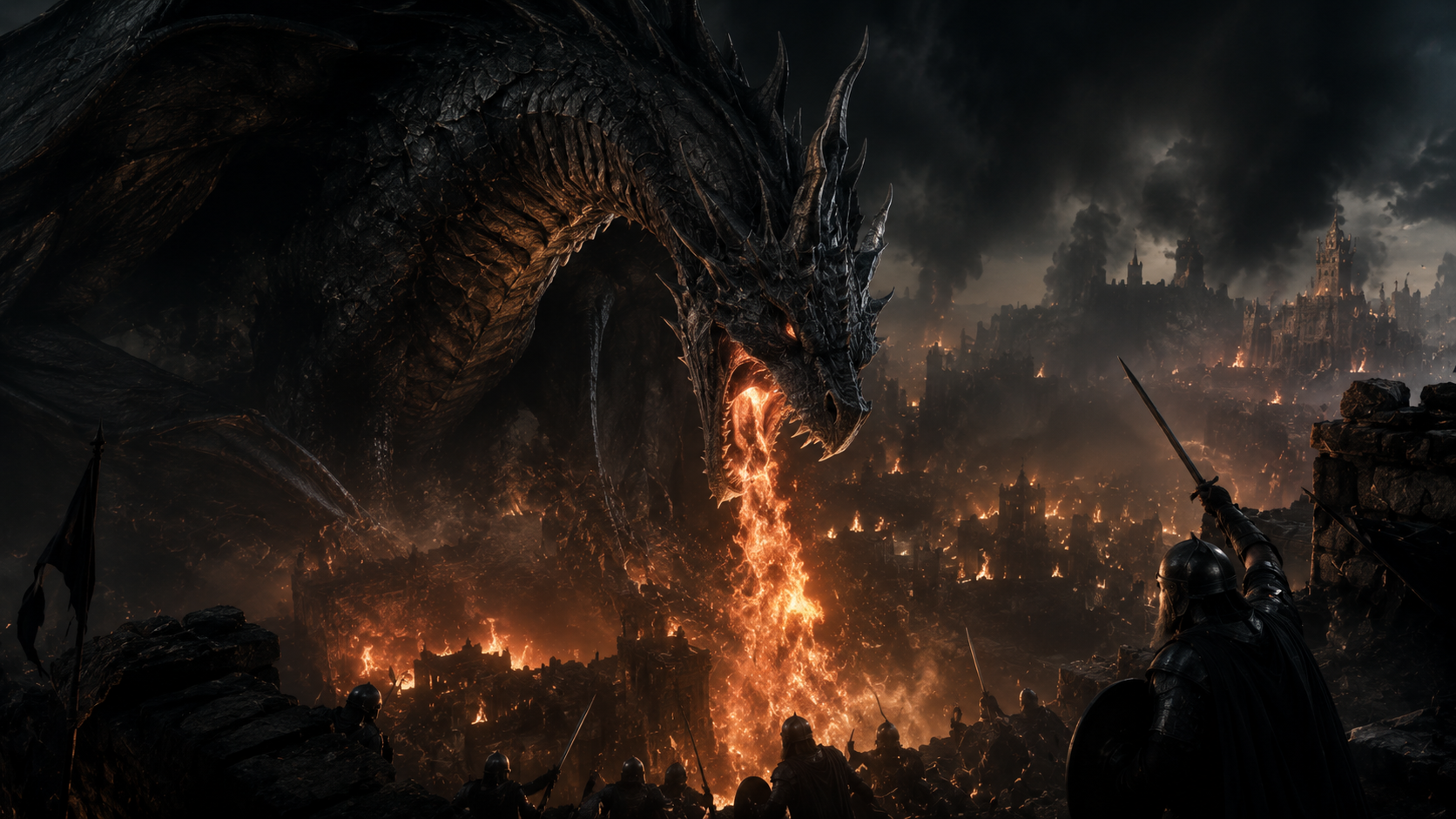
Hesiod's anxiety is about legitimacy. The Theogony, composed in the archaic Greek period of the late eighth or early seventh century BCE, is a work of ideological consolidation. It narrates the succession of divine generations, from Chaos and Gaia, through the Titans, to the Olympians, not merely as cosmological fact but as cosmic argument. The right gods won, and their winning was necessary, and it was permanent. Zeus does not simply rule; he rules because he is the culmination of a process that was always tending toward his rule. The long and violent business of Titanomachy, the defeat of Typhon, the binding of Kronos, these are not regrettable episodes in divine history but the structural requirement of legitimate order. And yet the anxiety of the poem is precisely that this order required so much violence to establish, and that the violence was not entirely in the past. The suppressed prophecy that Zeus too might be overthrown by a son more powerful than the father, hovers over the text like an unresolved dissonance. His swallowing of Metis, the goddess of cunning, is not triumphant. It is prophylactic. The greatest of the Olympians has to consume the principle of wisdom itself to ensure his own survival, and in doing so he reveals that the cosmic order he embodies is not natural but constructed, not permanent but defended. The deep fear the Theogony is processing is the fear of illegitimacy. The suspicion that power has no foundation beyond the capacity to hold it, and that the gods are simply the last ones standing.
This anxiety maps directly onto Hesiod's historical moment. Archaic Greece was a world in which Olympian religion was not yet the settled inheritance it would later appear to be. It was still being assembled, consolidated, argued for. The Theogony is participating in that consolidation. It answers a real cultural need. To believe that the powers governing the world have earned their authority, that their violence was necessary rather than arbitrary, that chaos has been genuinely and finally defeated. The failure of that belief to be entirely convincing, the leaked uncertainty about Zeus's permanence, the unease around Prometheus and his still-unpunished knowledge, is the trace of the anxiety the poem is working against. What the Theogony wants is a world that is governed, and can prove it.
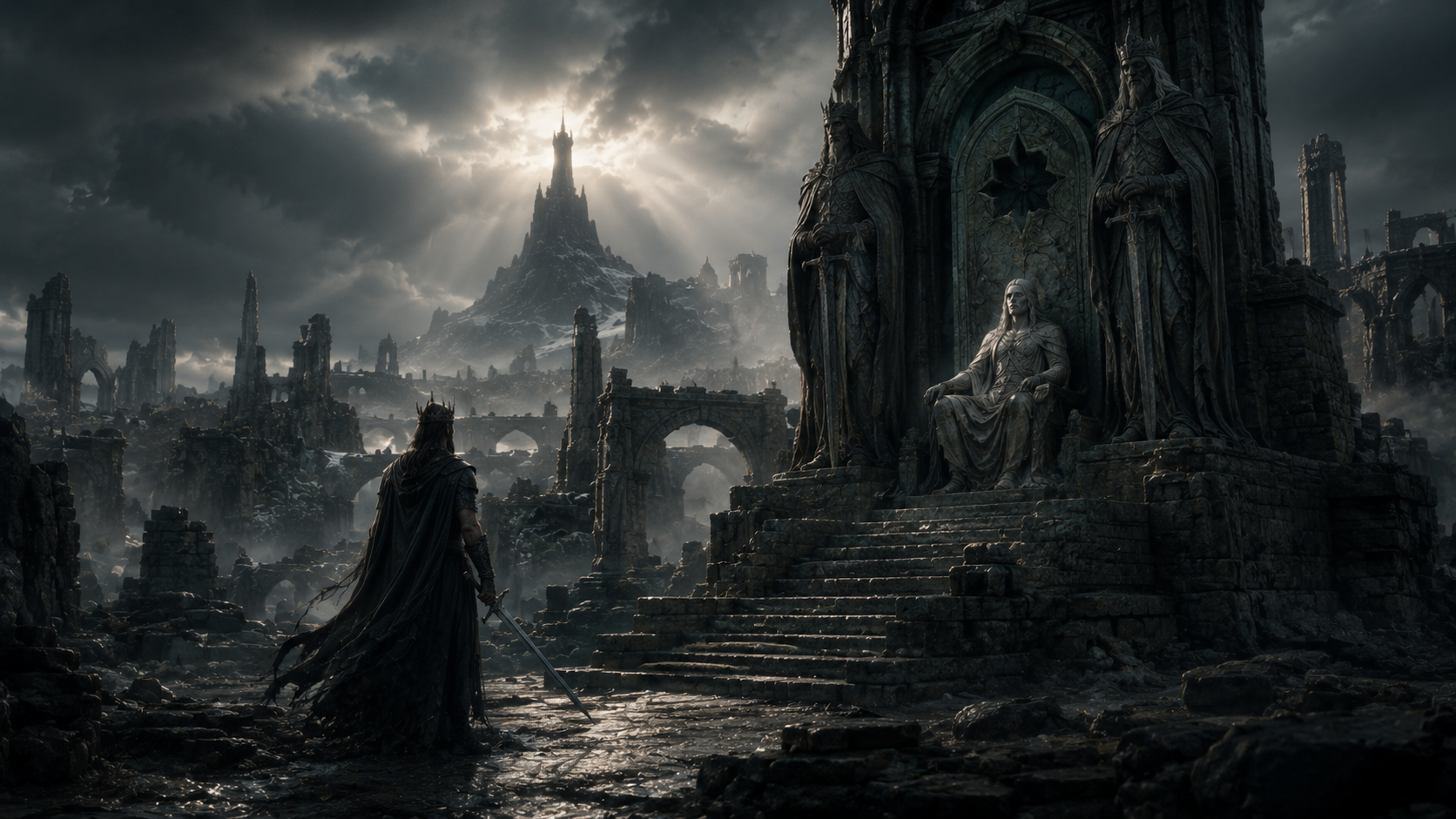
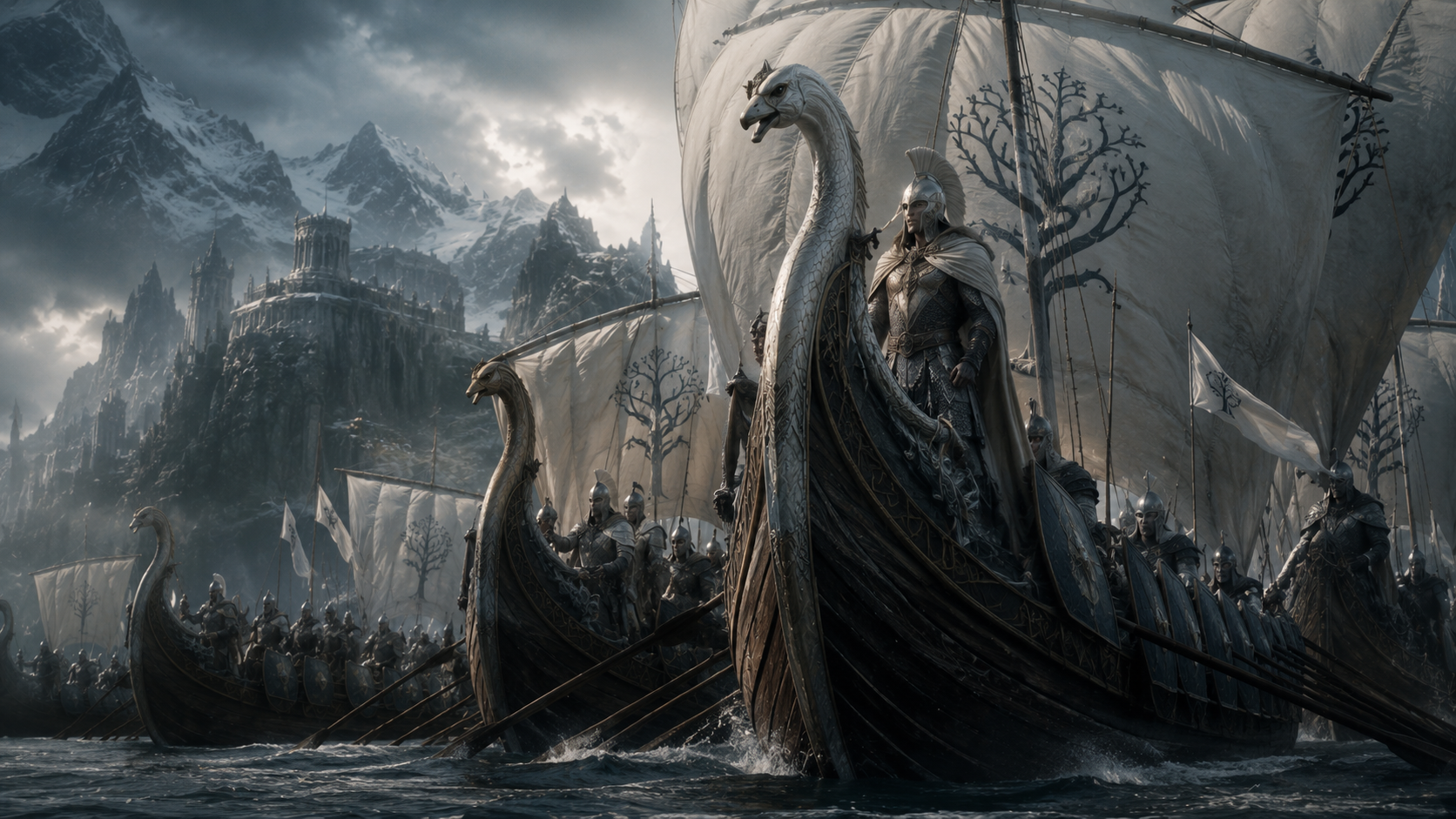
What the Ainulindalë wants is something altogether different. Tolkien's creation narrative, written and revised across most of his adult life and published posthumously in The Silmarillion in 1977, begins with Ilúvatar's music, a cosmic harmony of divine intelligences, the Ainur, singing a theme that becomes the world. Into this harmony comes Melkor, the mightiest of the Ainur, who introduces his own theme, a discord that spreads through the music and cannot be silenced. The formal theological resolution is swift and apparently decisive. Ilúvatar demonstrates that Melkor's discord has been incorporated into the music without diminishing it, that evil serves the pattern without knowing it, that free will and the ultimate goodness of creation are compatible. As theodicies go, this one is unusually tidy. And then The Silmarillion proceeds to spend four hundred pages contradicting it.
The actual texture of the book, the Fall of Gondolin, the Children of Húrin, the Oath of Fëanor and its cascading catastrophes, the drowning of Númenor, the slow fading of the Elves, tells a story in which the formal resolution of the theodicy is true only in the most abstract sense. Yes, evil serves the pattern. Yes, the music continues. But the particular things that were beautiful, the Trees of Valinor, the Silmarils, the great kingdoms of the First Age, cannot be recovered. They were made, and they were lost, and everything since is diminishment. This is not a world that has been secured against chaos. It is a world that contains loss as a structural feature, and the deeper you enter it, the more it seems that the primary law of Tolkien's universe is the irreversibility of beauty's destruction. What the Ainulindalë wants is not a world that can be shown to be governed. It is a world in which the fact that beautiful things are lost can be made to feel like more than mere tragedy. The deep fear is not illegitimacy but irreversibility. The suspicion that the world's greatest makings cannot be recovered, that diminishment moves in only one direction, that the best moments are the earliest ones and everything is a falling away.
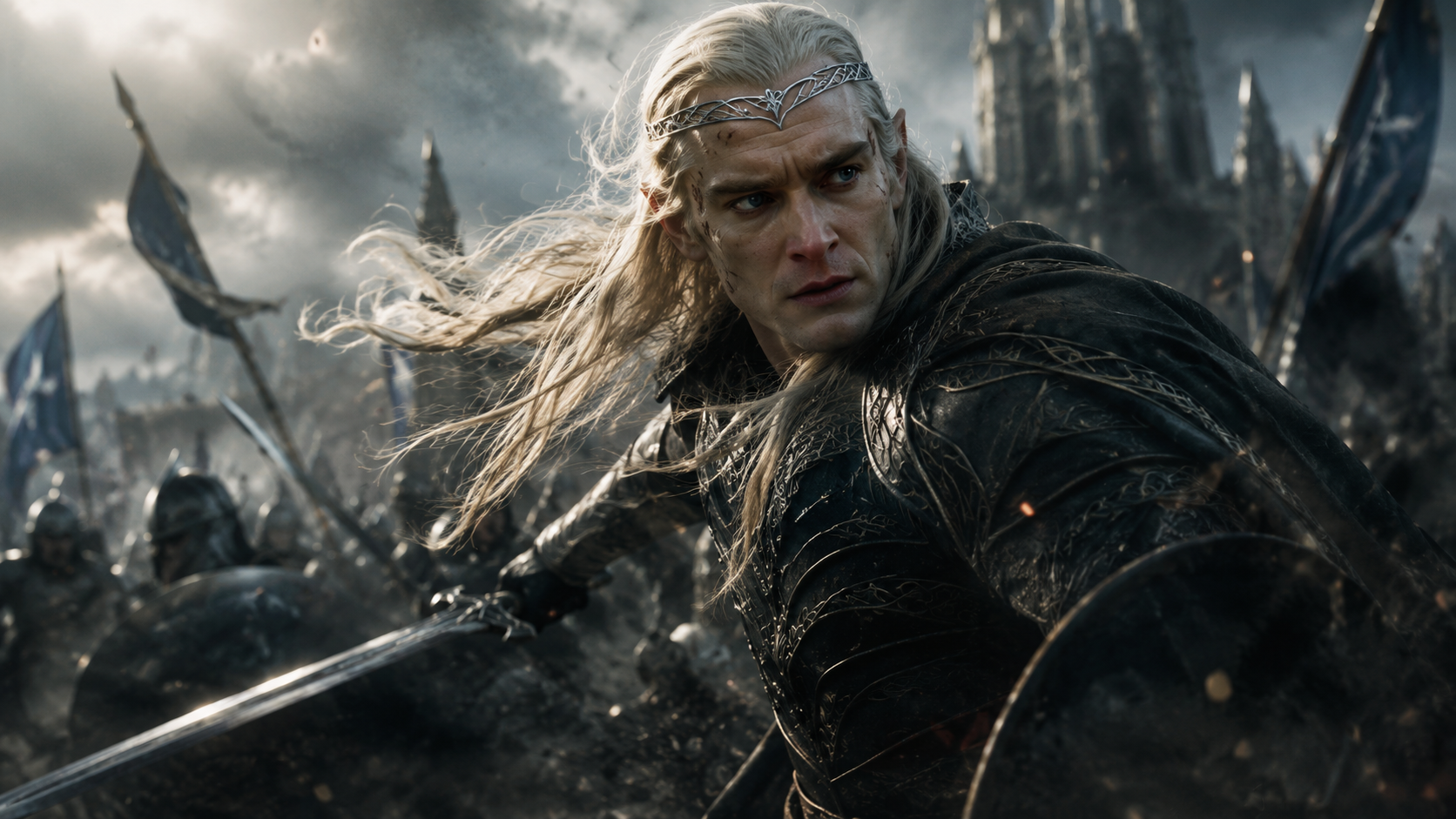
This distinction between political anxiety and elegiac anxiety carries a further implication about the relationship each text constructs between the author and power. Hesiod in Works and Days is a small farmer writing against the arbitrary authority of aristocratic judges, men he calls gift-devouring. The Zeus of the Theogony is almost compensatory, a guarantor of cosmic justice that daily life conspicuously failed to provide. The elaborate mythology of divine legitimacy is doing real consolatory work for someone who has very little power in the world as he finds it. The cosmogony invents a world that is ordered in a way his actual world is not. Tolkien, by contrast, is a Catholic Oxford don who distrusts modernity as such. Not a particular unjust power structure but the entire trajectory of the modern world, its industrialism, its disenchantment, its leveling of the places he loved. His cosmogony does not invent an order the world lacks; it imagines an abundance the world has already lost. The Ainulindalë and the mythology it introduces do not argue that the world is governed. They argue that it was once more beautiful, and that this matters, even if nothing can be done about it.
The difference between the two texts is also, finally, a difference in what each author believes creation is. For Hesiod, creation is succession. The replacement of one order by another, the young gods defeating the old ones, the new dispensation justified by its victory. Creation is essentially political, and the cosmogony's task is to narrate the politics correctly. For Tolkien, whose thinking about creation was deeply shaped by his Catholicism and by the On Fairy-Stories essay he delivered as the Andrew Lang Lecture at St Andrews in 1947, creation is subcreation. The making of beautiful things by beings who are themselves made. Ilúvatar creates the Ainur. The Ainur sing the world into existence. Fëanor captures the light of the Trees in the Silmarils. Celebrimbor forges the Rings. Each act of making is derivative of a prior one, and each act of making produces something that can be lost. The great catastrophes of The Silmarillion are not political coups but artistic destructions. The Trees are poisoned. The Silmarils are stolen. The rings are unmade. The anxiety Tolkien is processing is not about who governs but about whether beauty, once it has been made, can be kept.
These are cosmogonies written from inside different relationships to the same fundamental problem. The world contains disorder, and the disorder cannot be wished away. Hesiod's answer is that the disorder was defeated, even if the victory required enormous violence and requires ongoing maintenance. Tolkien's answer is that the disorder is real and permanent, but that the things made in the face of it were genuinely worth making. The first answer wants to believe in governance. The second wants to believe in art. That both answers take the form of a story about the world's first moments. Before history, before human memory, in the time when only gods and their works existed. It tells us something important about why the cosmogonic form exists at all. We reach for the beginning when what we need to justify, or to mourn, is too large for ordinary argument.
Latest Articles